






SINGAPORE, 29 October 2026 – ASEAN took a significant step towards strengthening regional cooperation on labour market intelligence with the launch of the ASEAN Labour Statisticians Network (ALSN) in Singapore. The Network serves as a regional community of practice that brings together labour statisticians, labour market analysts, policymakers, and practitioners to strengthen capacity development, knowledge sharing, and institutional collaboration on labour statistics and labour market information systems (LMIS) across ASEAN. The ALSN aims to support more timely, reliable, and policy-relevant labour market data to inform labour, employment, skills, and human resource development policies in the region.
The launch was followed by the Inaugural ALSN Expert Forum, held from 27 to 29 October 2026 and hosted by the Ministry of Manpower of Singapore, with the support of the ASEAN Secretariat, the German Government-funded Regional Cooperation on Labour Market Policy and TVET for a Twin Transition in ASEAN (RECOTwin) project, the International Labour Organization (ILO), and the Organisation for Economic Co-operation and Development (OECD).
Representatives from ASEAN Member States exchanged experiences and explored practical approaches to strengthen labour market information systems and improve their responsiveness to emerging labour market trends, technological change, and evolving skills demands. Discussions focused on areas for future collaboration through the ALSN, including updating occupational classifications and job descriptions, improving the availability and granularity of labour market data, strengthening skills anticipation and forecasting, leveraging artificial intelligence for data analytics, and utilising online job advertisements as alternative data sources. The Forum also underscored the importance of partnerships with international organisations and labour market institutions, including the European Network on Regional Labour Market Monitoring (EN-RLMM), to support innovation and knowledge exchange.
In his opening remarks, Mr. Stanley Loh, Permanent Secretary of Singapore’s Ministry of Manpower, emphasised the importance of high-quality labour market information in enabling governments to anticipate labour market changes, respond effectively to workforce challenges, and support workers and enterprises in an increasingly dynamic economic environment.
During the foundational phase of the ALSN, ASEAN Member States will nominate labour statisticians, labour market analysts, policymakers, researchers, and other relevant stakeholders involved in the production, analysis, and utilisation of labour market information. Under Singapore’s Convenorship for the period 2026–2030, the ALSN will develop a five-year work plan to guide regional cooperation and strengthen labour market information systems across ASEAN, contributing to more evidence-based labour and employment policies.
In his remarks, Deputy Secretary-General of ASEAN for the ASEAN Socio-Cultural Community, H.E. San Lwin, underscored the broader significance of the Network: “Let us use the ALSN to strengthen not only our statistics, but also our collective capacities to understand, anticipate and shape the future of work in ASEAN. Ultimately, all efforts should contribute to the resilience of our labour markets, competitiveness of our enterprises, and quality of life of our workers.”
Building on the momentum of the Forum, ASEAN also launched the Study Report on the Analysis of Supply and Demand for Green Jobs and Green Skills in ASEAN on 27 October 2026. Endorsed by the ASEAN Senior Labour Officials Meeting (SLOM) earlier this year and completed with the support of the RECOTwin project, the study provides evidence-based findings and recommendations to support regional cooperation on green jobs and green skills development. The report highlights the importance of aligning technical and vocational education and training (TVET) systems with labour market demands, strengthening labour market data intelligence, and promoting coherent governance frameworks for green employment.
Speaking at the launch, DSG San Lwin highlighted the strategic importance of workforce readiness for the region’s green transition: “ASEAN’s competitiveness in the green economy depends not only on our technologies and innovation, but it also depends on the capabilities of our workforce. Therefore, investing in green skills is pivotal to ASEAN’s sustainable economy and our competitiveness and resilience in the global supply chains.”
In her remarks, Ms. Ingrid-Gabriela Hoven, Managing Director of Deutsche Gesellschaft für Internationale Zusammenarbeit (GIZ), reaffirmed Germany’s commitment to supporting ASEAN’s efforts to strengthen labour market resilience and workforce preparedness for green transition of economies through enhanced labour market intelligence, skills development, and regional cooperation: “This Analysis directly contributes to the ASEAN Framework and Action Plan for a Just and Inclusive Transition to Green Jobs. Germany is a committed global partner of the green transition, and GIZ will continue to support the implementation of ASEAN’s green jobs agenda through our RECOTwin project. The green transition does not stop at borders. Neither should our cooperation.“
The launch of the ALSN and the green jobs study reflects ASEAN’s commitment to strengthening evidence-based policymaking and ensuring that the region’s workforce remains resilient, adaptable, and future-ready amid the green and digital transitions.
The Study Report on the Analysis of Supply and Demand for Green Jobs and Green Skills in ASEAN is available here


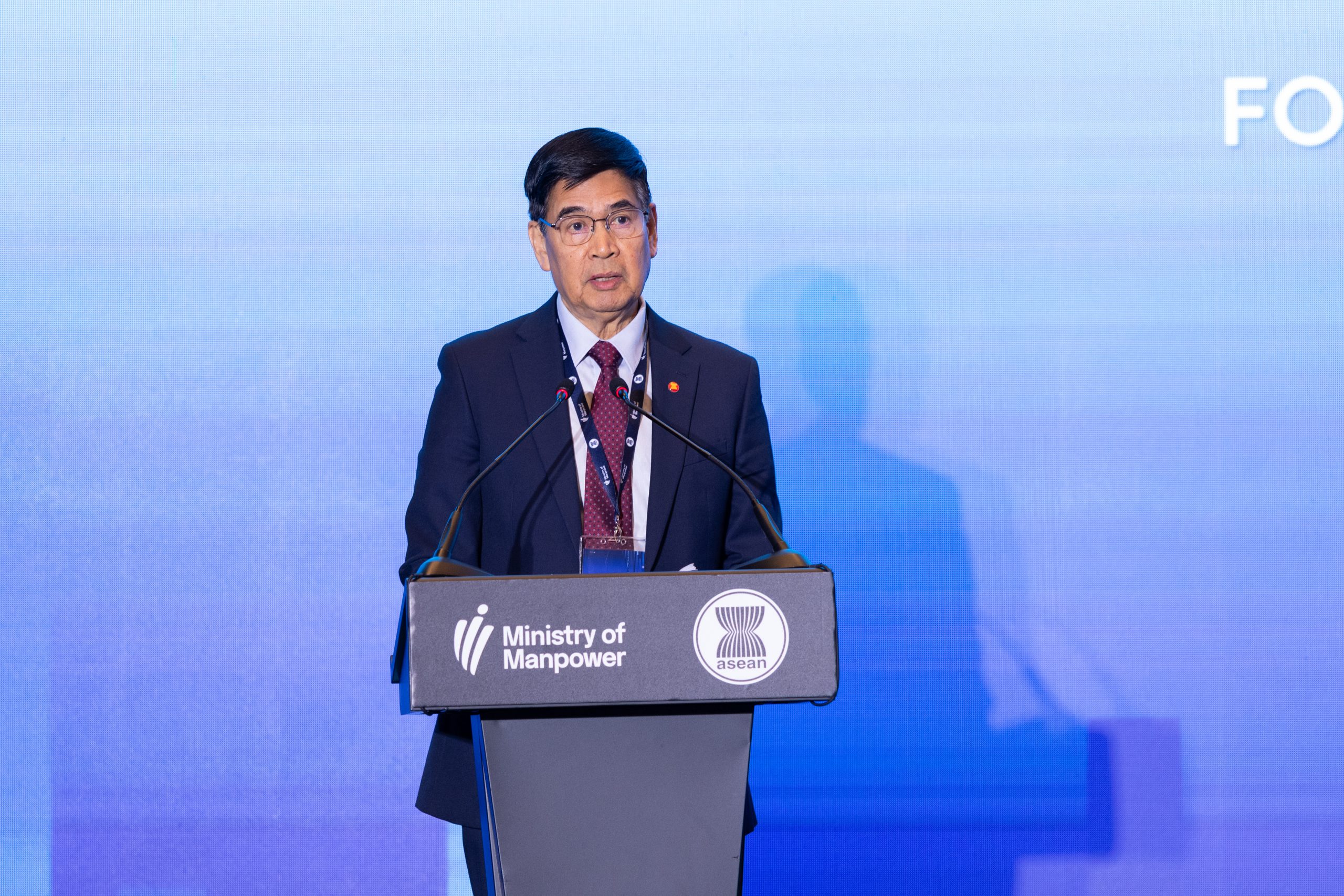


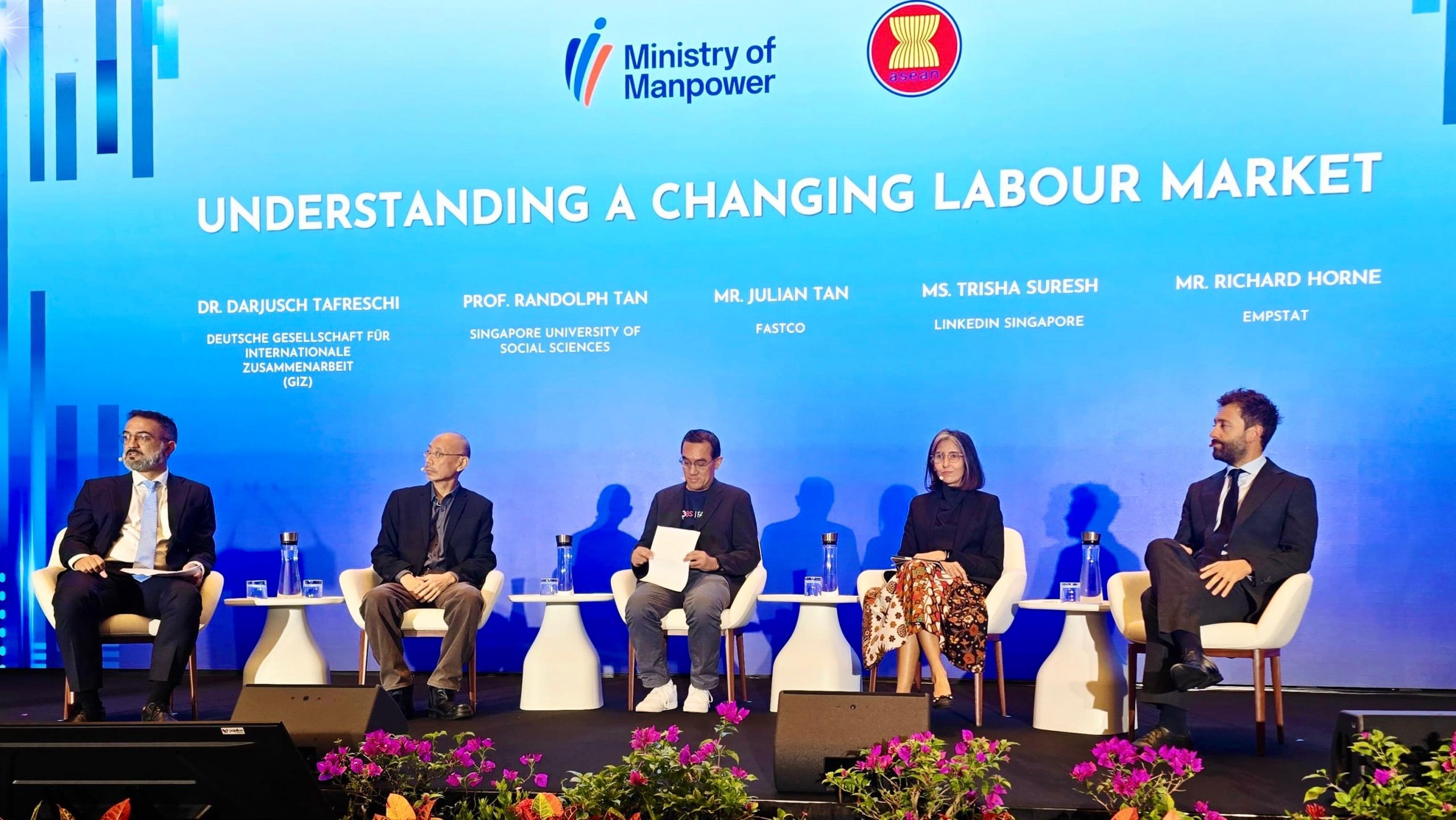


Photo credit: ASEAN Secretariat and Ministry of Manpower, Singapore
